
Toolbox Talk
Vallencourt Construction Company’s Toolbox Talks are designed to reinforce job site safety, awareness, and best practices through real-world conversations. These talks highlight the daily responsibilities that keep our crews safe, our projects moving, and our standards consistent across every site.
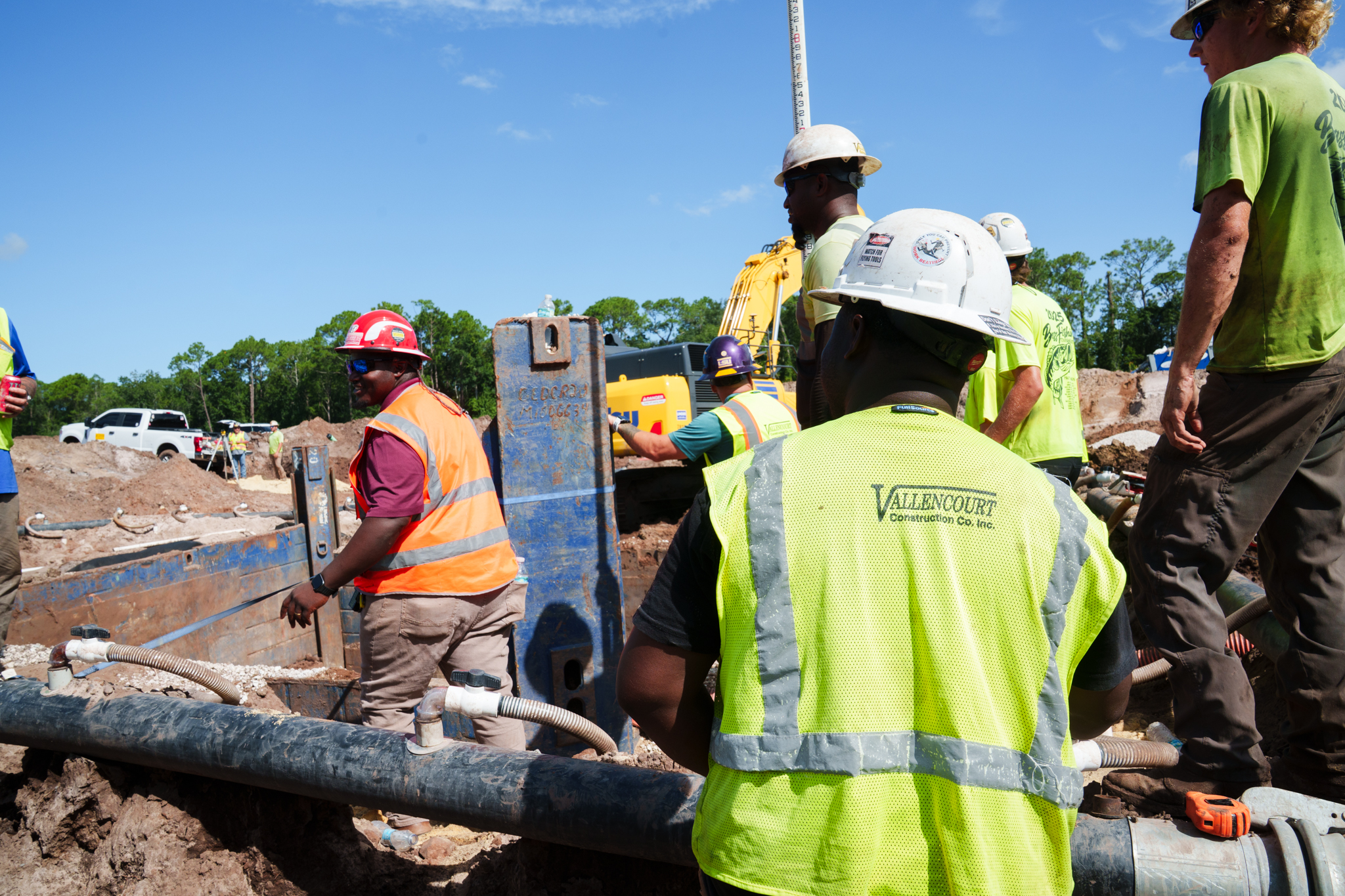
Latest Toolbox Talk
Beat the Heat: Recognizing & Responding to Heat-Related Illness
In this week's Toolbox Talk, Field Safety Inspectors Khalifa Barr and Tripp Taratus break down heat-related illness — what to watch for and how to respond when the temperature climbs.
They cover the two most common heat illnesses, heat exhaustion and heat stroke, including the warning signs of each, from headache, nausea, dizziness, and heavy sweating to the more serious symptoms of confusion, slurred speech, rapid pulse, and high body temperature. You'll learn the proper first-aid steps for cooling someone down, when 30 minutes of recovery isn't enough, and exactly when it's time to call 911 and get medical personnel en route.
The team also clears up a few common myths about working in the heat and shares a simple reminder for the crew: if you feel like you're overheating, tell your foreman and take the right steps before it becomes an emergency.
Stay safe out there this summer.
Disclaimer: This video is for general safety awareness and training purposes only and does not constitute professional medical advice. In any medical emergency, call 911 and seek qualified medical care.
Other Toolbox Talks
Confined Space Safety: Harness & Retrieval System Setup
This toolbox talk reviews the proper use of harnesses and outside retrieval systems when working in confined spaces. The video covers how to test atmospheric conditions using a gas monitor, how to correctly set up tripods and retrieval winches, and the importance of maintaining visual contact with entrants at all times. Proper harness fit, equipment ratings, and confined space permit procedures are also discussed to ensure crews are operating safely and in compliance.
Rigging Safety: Proper Lifting Practices on the Job Site
Rigging is a critical part of lifting operations and must be performed correctly to ensure the safety of everyone on the job site. Proper rigging practices help prevent dropped loads, equipment damage, and serious injuries.
Before any lift begins, all rigging equipment must be inspected for wear, damage, or defects. Slings, chains, hooks, shackles, and hardware must be rated for the load being lifted and used according to manufacturer specifications. Damaged or unapproved rigging equipment must not be used.
Loads must be properly balanced and secured before lifting. Rigging should be attached at approved lift points and configured to maintain control of the load throughout the lift. No employee should ever stand under a suspended load or place themselves in a position where they could be struck if the load shifts or fails.
Clear communication is essential during rigging operations. The designated signal person and equipment operator must maintain constant awareness of each other and ensure all crew members are clear before lifting begins.
This video reinforces Vallencourt Construction’s expectations for safe rigging practices. If there is any uncertainty about load weight, rigging configuration, or equipment condition, the lift should not proceed until concerns are addressed. Employees are encouraged to contact the Safety Department whenever clarification or additional guidance is needed.
Dry Cutting vs. Wet Cutting
Dry cutting and wet cutting are two different methods used when cutting concrete, pipe, or masonry materials. While both may achieve the same end result, the process and safety implications are very different.
Dry cutting creates airborne dust that can contain silica, which poses serious health risks when inhaled. Because of this, dry cutting is not permitted when wet cutting can be used. If dry cutting is observed without proper controls in place, the work must stop.
Wet cutting uses a continuous water supply at the point of contact to reduce dust and control silica exposure. Water must be applied correctly and consistently throughout the cut. Improper methods, such as using a pump sprayer or a truck hose, are not acceptable substitutes for a proper water tank and delivery system.
This video reinforces Vallencourt Construction’s expectations for safe cutting practices. Crews are responsible for ensuring the correct equipment is in place before work begins. If proper wet cutting methods cannot be achieved, the task should not continue until it can be done safely.
For questions or assistance, employees are encouraged to contact the Safety Department to ensure work is performed safely and in compliance with company standards.